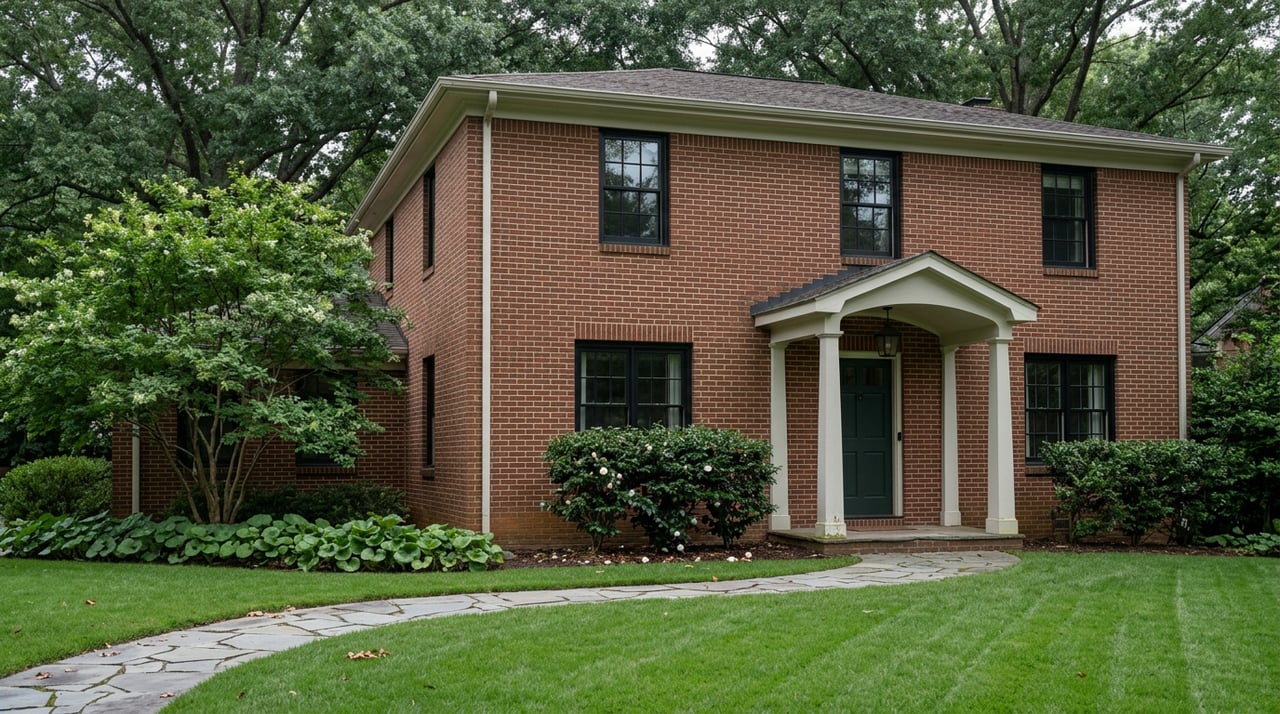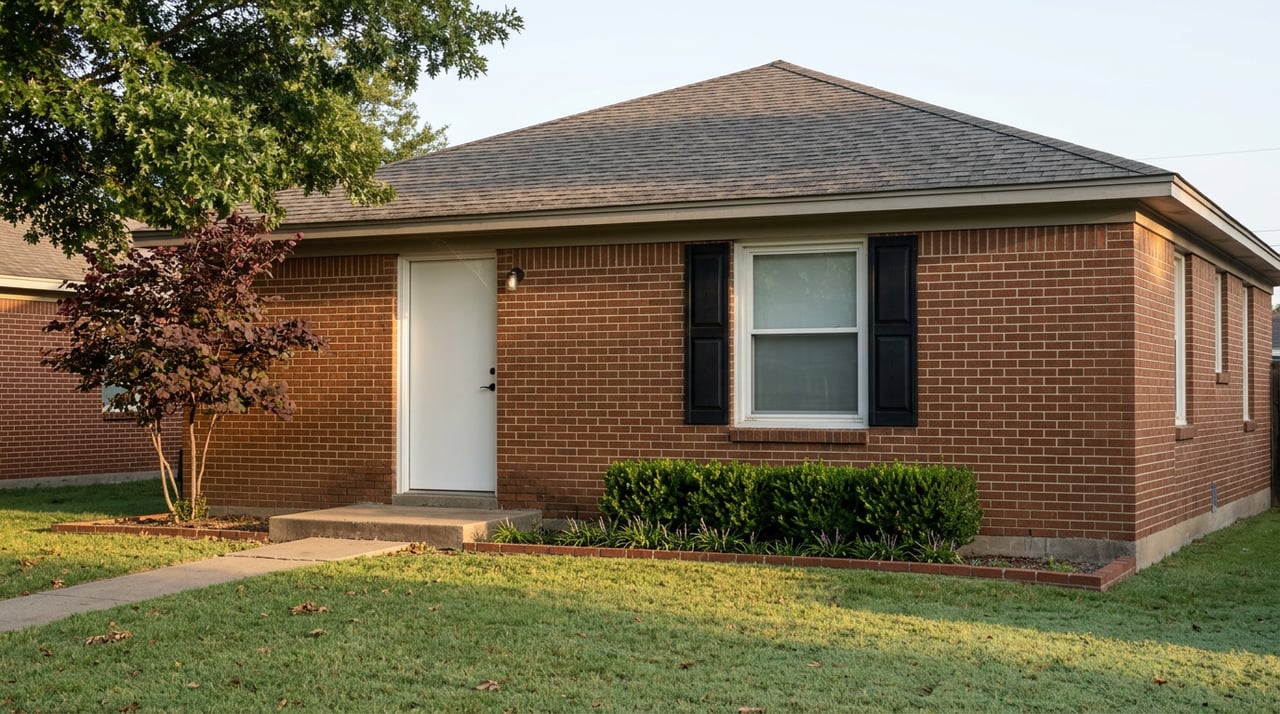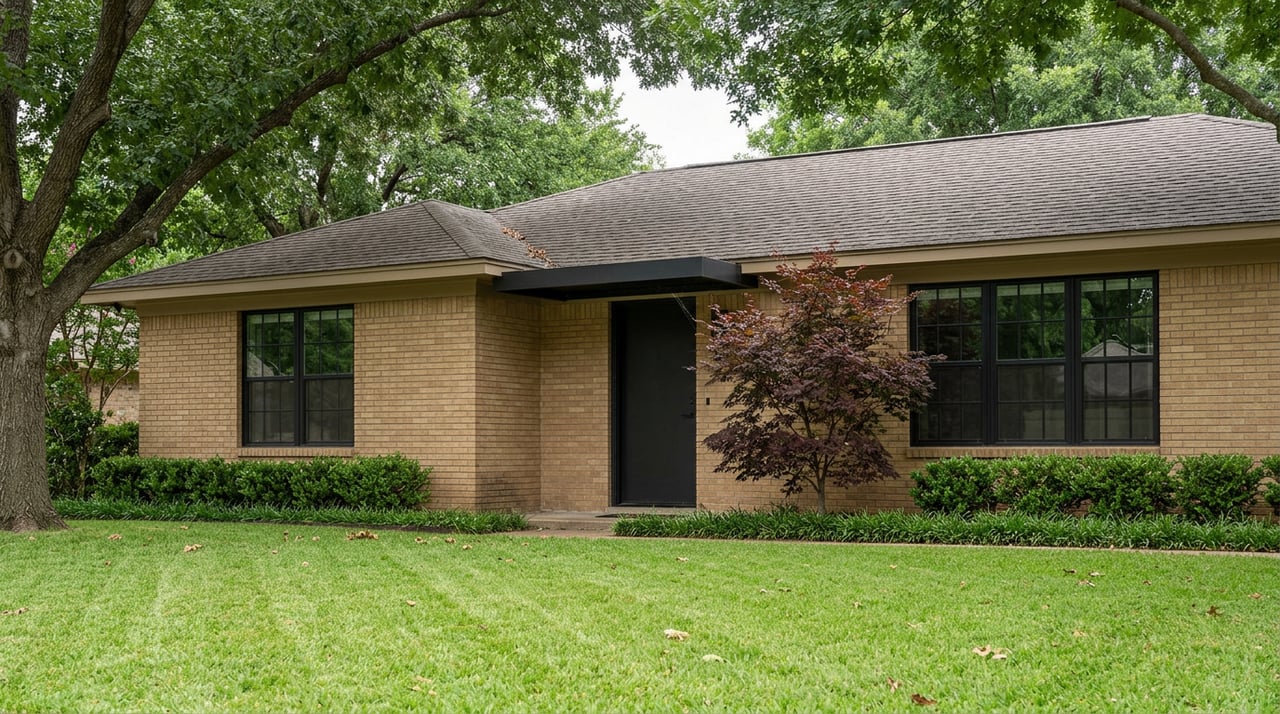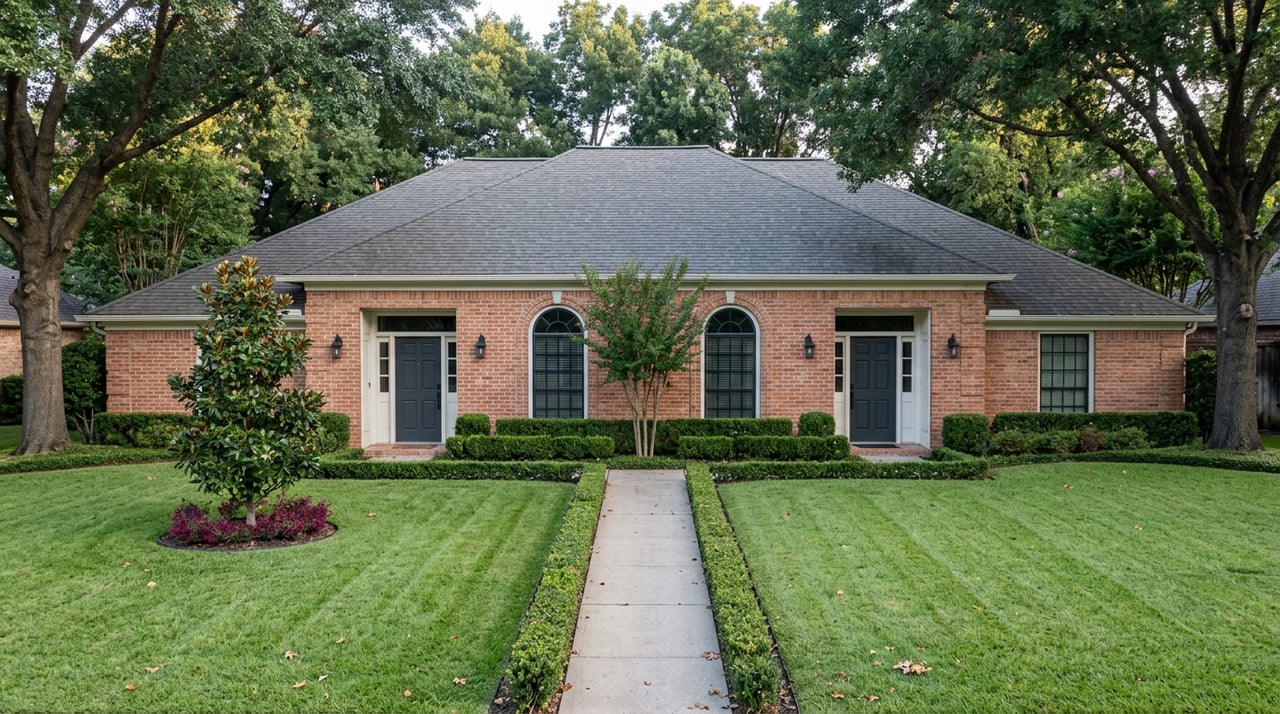
A listing went up this summer for a one-bedroom, one-bath duplex on Richmond Avenue in the 75206 zip code. Two units, mirrored floor plans, roughly 768 square feet apiece. New split-unit AC and heat in both. New 200-amp electrical panels. New tankless water heaters. One side already leased at $1,700 a month. Asking price: $750,000.
Run that math on a per-square-foot basis against a freshly renovated single-family home a few blocks over and the duplex looks wildly overpriced. Compare it to what a $750,000 house buys almost anywhere else in East Dallas and it looks like a mistake. It is not a mistake. It is a fairly clean example of how Lower Greenville actually prices real estate, and it explains why the neighborhood's median price numbers rarely mean what they appear to mean.
The house was never the product
The Richmond Avenue duplex sits on 9,250 square feet, a large lot for this part of the city. The listing language, and the language on comparable listings around the neighborhood, gives away the real product being sold. A 1927 house nearby is marketed explicitly for its teardown potential, priced for the dirt underneath it rather than the structure standing on it. A lot in Delmar Heights is listed with the phrase "value in land" doing the actual selling. Single-family new construction has become the dominant redevelopment pattern in this part of East Dallas, which means an oversized, well-positioned lot is worth building on regardless of what currently occupies it.
That is what is happening at 6010 Richmond. A builder looking at this listing is not underwriting the finishes. They are underwriting a buildable footprint that would be difficult to assemble any other way in a neighborhood this built out, with the existing rental income covering carrying costs while permits move through the city. An owner-occupant looking at the same listing runs a completely different calculation: move into one unit, keep the existing tenant or find a new one, and let $1,700 a month chip away at a mortgage on a walkable block near Trader Joe's and the Granada Theater. Both buyers want the same 9,250 square feet. Neither one is paying for the appliances.
This is worth sitting with if you are shopping for comps in Lower Greenville, because it means the neighborhood contains at least two separate pricing logics operating side by side on the same streets, sometimes on the same block. A renovated, move-in-ready house prices on finish quality and livable square footage. A teardown-condition house on a large lot prices on the land underneath it, largely independent of the structure's condition. A per-square-foot average that blends both numbers together tells you very little about what either type of property actually costs.
You can see this dispersion in the neighborhood-level data itself. One widely used housing data provider reported the average Lower Greenville sale price up sharply, roughly 32 percent year over year, in the month ending around May 2026. The same source reported the three-month median through May 2026 down about 7 percent from the year before. An average rising fast while the median falls is not a contradiction. It is what happens when a handful of high-dollar land-value sales and new-construction closings pull the average upward while the bulk of ordinary transactions cool. If you are pricing a listing off a single median number pulled from a portal, you are almost certainly missing which of those two markets you are actually standing in.
Two neighborhoods, two different math problems
It helps to see the contrast next to a neighborhood that looks similar from the outside but prices on a different logic entirely.
| Lower Greenville | Lakewood (east of Abrams Road) | |
|---|---|---|
| What drives price | Lot size and redevelopment potential in a tightly built entertainment corridor | Larger lots, larger homes, proximity to White Rock Lake |
| Housing stock | Century-old bungalows, duplexes, small apartment buildings, infill new construction | Larger single-family homes on bigger footprints |
| The volatile part | The restaurant and bar lineup along Greenville Avenue | Relatively little; the draw is the lake and the park system |
Lakewood's price ceiling is set by size and lake access, factors that do not change from one lease cycle to the next. Lower Greenville's price ceiling is set by how much land a builder can assemble in a neighborhood where century-old lots and an active entertainment strip sit on the same blocks. That is a market built on scarcity of a fixed input, not on the current retail mix, which brings up the second half of the story.
What's rented turns over, what's owned does not
Greenville Avenue's restaurant scene has gone through real churn in the past year, and the mechanism behind it has a name in local restaurant circles: the lease cliff. Many of the corridor's operators signed five-year leases during the 2020 to 2021 pandemic recovery, when landlords needed tenants and rents were soft. Those leases have started coming due at 2025 and 2026 market rents, and the spread between the old rent and the new one has been too wide for several longtime tenants to absorb.
The list of closures over roughly the past year is not small. Rye, the Michelin-recognized restaurant known for its cocktail program, closed in March 2026 so its sister concept Apothecary could expand into the space, with the owners also citing permit and zoning pushback. HIDE, the rooftop cocktail bar, closed in early 2026. Meyboom Brasserie closed in August 2025 less than two years after opening. Swizzle, the tiki bar at 1802 Greenville Avenue, closed in the summer of 2025 after its rent roughly doubled at renewal. Simply Fondue, a fixture on the avenue since 1990, served its last cook-it-yourself meal in summer 2026 after more than three decades. Manpuku Japanese Yakiniku Grill closed in July 2026 after five years on the strip.
Replacement operators have been announced for those addresses. Fonda Toro, a casual Mexican restaurant with a sushi bar from the team behind Coeval Studio's East Dallas hospitality projects, is set to take over the old Meyboom space at 2100 Greenville Avenue with an opening expected around November 2026. Escondido, a Tex-Mex concept from restaurateur Jon Alexis, had been slated to take over the former Blue Fish space at 3519 Greenville Avenue with a mid-2026 opening. Chef Aubrey Murphy, formerly of SER Steak + Spirits, is opening a new restaurant called Brute in the old Swizzle storefront next to Wabi House. The team behind Goodwins and Alamo Club took over the lease at the former Pizzeria Testa space after its longtime owner decided to make a change.
Yahoo News reported that Madison Partners, the landlord behind the Simply Fondue space, put the dynamic plainly when that lease ended. Managing partner Jon Hetzel wrote that "every concept has its run" as the search began for a new tenant.
That sentence is the other half of the pricing story. The restaurants and bars are the flow, rotating on five-year cycles as leases reset to current rents. The lots underneath them, and the residential blocks behind them, are the stock, and they are what a home buyer in Lower Greenville is actually pricing. A buyer paying a premium for walkability to Greenville Avenue is not paying for Rye or Swizzle specifically. Those names were never going to be a fixed feature. The buyer is paying for a corridor that reliably refills itself, which is a different and more durable thing to buy than any single restaurant's popularity.
What this means if you're pricing a Lower Greenville property
If you are comparing listings in this neighborhood, ask what you are actually being quoted a price for before you compare it to anything else. A renovated three-bedroom on a standard residential lot and a teardown-condition duplex on an oversized lot are not competing in the same market even if they sit two blocks apart, and a blended median or average from either of them tells you little about the other. Pull the lot size and zoning before you trust a per-square-foot number. Ask whether recent comparable sales in your target block were livable-condition sales or land-value sales, because the two produce very different price-per-square-foot figures that should not be averaged together.
If you are pricing in the entertainment corridor itself, plan around the churn rather than around any specific business. The mix of restaurants and bars two years from now will not be the mix that exists today, and that has been true for the past several years running. What has stayed constant is the density of the scene and the fact that vacated spaces on this strip do not sit empty long.
A few questions worth asking
Does a listing priced "for the lot" mean the house is unlivable? Not necessarily. It means the seller and likely buyer both expect the land value to exceed what the current structure would appraise for on its own, which is common on older, larger lots in this pocket of East Dallas regardless of the house's actual condition.
Will the restaurant turnover on Greenville Avenue hurt nearby home values? The pattern so far suggests otherwise. Closed spaces on the corridor have attracted new operators, though the timing varies, and the walkability premium tied to home values reflects the corridor's overall density rather than any single business.
How should I read a median price I see quoted for Lower Greenville? Treat it skeptically until you know the time window and whether it reflects listed or closed sales. Given how much land-value pricing skews the numbers here, a median from one month can look very different from a median three months later without the underlying market actually shifting.
If you are trying to figure out what a specific Lower Greenville lot, duplex, or renovated home is actually worth, the comps require more than a portal average. Brianna East works this pocket of East Dallas block by block and can walk you through what a given lot supports, what a given structure adds on top of that, and how to read a listing that is quietly telling you which kind of sale it actually is. Let's Connect.