Buying or selling in Old East Dallas and not sure who pays what at the closing table? You are not alone. Closing costs can feel confusing, especially with older homes and historic districts in the mix. In this guide, you will see what buyers and sellers typically pay in Dallas County, realistic ranges to budget, and where you can negotiate to save. Let’s dive in.
What closing costs cover in Dallas County
Closing costs are the fees needed to finalize a home sale. In Dallas County, local custom matters. Sellers typically cover the owner’s title insurance policy and real estate broker commissions, while buyers usually pay lender-related fees, the appraisal, inspections, and their escrow funding. These are customs, not laws, so you can negotiate who pays what in your contract.
Texas does not charge a state or local real estate transfer tax. That removes a line item you might see in other states. You will still see recording and county clerk fees, which are usually in the low hundreds in total.
Property taxes are a major piece of the puzzle. In many City of Dallas neighborhoods, combined rates often land somewhere above 2% of assessed value. At closing, taxes are prorated between buyer and seller based on the closing date, and buyers typically fund an escrow account for future tax and insurance bills.
Who usually pays what in Old East Dallas
Here is a quick tour of common items and who typically pays in Dallas County. Your contract can allocate costs differently.
- Real estate broker commissions: Typically seller pays, usually 5% to 6% of sale price.
- Owner’s title insurance policy: Typically seller pays. Premium is a one-time cost based on price.
- Lender’s title insurance policy: Typically buyer pays if there is a mortgage.
- Loan origination and points: Buyer pays. Often 0% to 1.5% of the loan amount, plus flat lender fees.
- Appraisal: Buyer pays. Often $400 to $800, higher for complex homes.
- Inspections: Buyer pays. General inspection often $300 to $600, with optional termite, sewer, or roof checks.
- Survey or survey waiver: Varies. Buyer often pays if lender requires a new survey. A seller may supply an existing survey when available.
- Escrows and prepaids: Buyer funds initial escrow for taxes and insurance, and pays prepaid interest.
- Recording and county fees: Commonly split by document type. Totals often in the low hundreds.
- HOA transfer and dues prorations: Negotiable. Transfer or estoppel fees often $150 to $500.
- Repairs or buyer credits: Negotiated in the option period or after inspections.
Old East Dallas context that affects budget
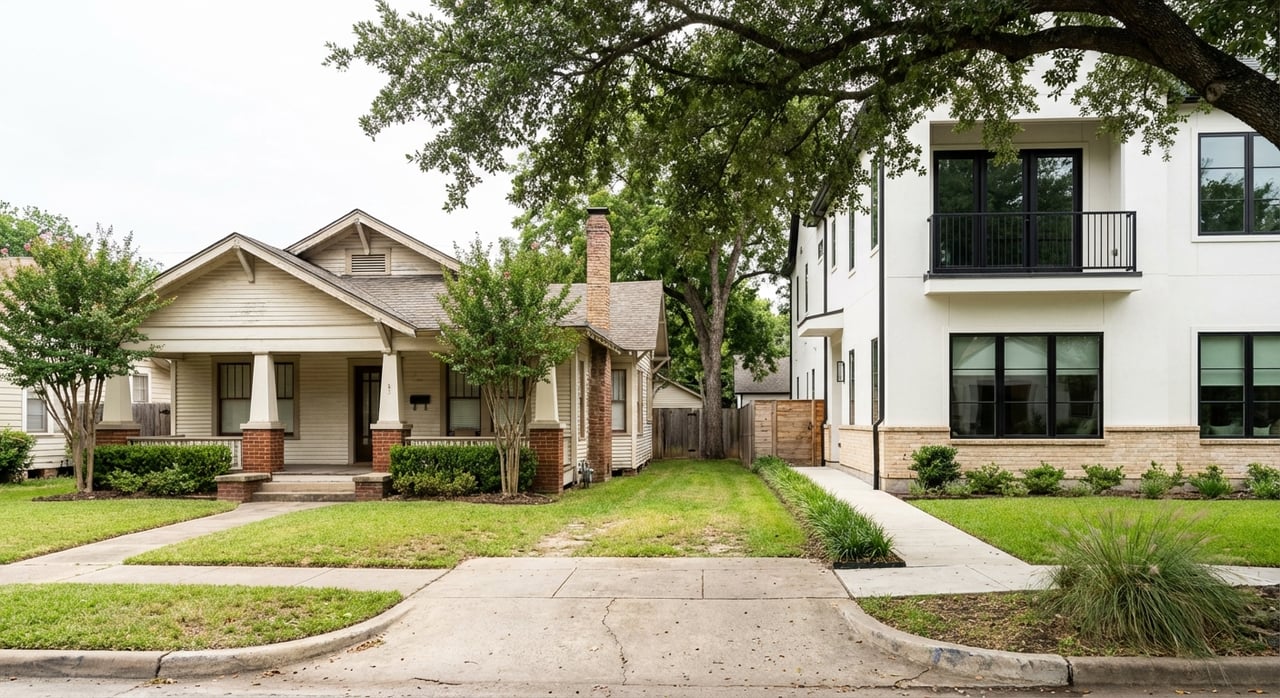
Old East Dallas includes historic and established areas like Munger Place, Junius Heights, and the Swiss Avenue area. Many homes are older, which can influence buyer costs. Homeowners insurance premiums can be higher for older properties due to age or roof condition. Complex lots or missing surveys can trigger a new survey order. If there is an HOA, confirm transfer fees and prorated dues early.
Buyer cost examples by price point
These examples assume a conventional loan with 20% down, typical Dallas County customs, and round-number estimates for taxes and insurance. Your lender’s Loan Estimate and the title company’s Closing Disclosure will show exact amounts.
Entry property at $350,000
- Lender fees and points at 0.5% to 1% of a $280,000 loan: $1,400 to $2,800
- Lender’s title policy: $600 to $1,200
- Appraisal: about $450
- Inspections: $400 to $900
- Survey if required: $400 to $800
- First year homeowners insurance: example $1,200
- Initial escrow deposit for taxes and insurance: about 2 to 6 months, $1,200 to $3,000
- Recording and misc. fees: $150 to $400
- Buyer total at closing: roughly $5,400 to $10,750, plus your down payment
Mid-range home at $600,000
- Lender fees and points at 0.5% to 1% of a $480,000 loan: $2,400 to $4,800
- Lender’s title policy: $1,000 to $1,800
- Appraisal: $500 to $700
- Inspections and survey: $500 to $1,200
- First year homeowners insurance: $1,200 to $2,500
- Initial escrow deposit for taxes and insurance: $2,000 to $6,000
- Recording and misc. fees: $200 to $500
- Buyer total at closing: about $7,800 to $17,500, plus your down payment
Restored or historic district home at $1,200,000
- Lender fees and points at 0.5% to 1% of a $960,000 loan: $4,800 to $9,600
- Lender’s title policy: $1,800 to $3,500
- Appraisal for complex properties: $600 to $1,200
- Inspections and specialized tests: $700 to $2,000
- Homeowners insurance: $2,000 to $4,000 or more
- Initial escrow deposit for taxes and insurance: $4,000 to $12,000
- Recording and misc. fees: $300 to $600
- Buyer total at closing: about $14,000 to $32,900 or more, plus your down payment
Seller cost examples by price point
Commission is often the largest seller expense. Seller costs below exclude any existing mortgage payoff.
Entry property at $350,000
- Real estate commissions at 6%: $21,000
- Owner’s title insurance policy at about 0.5%: about $1,750
- HOA transfer fees if applicable: example $200
- Property tax prorations based on closing date: variable
- Estimated seller total: about $22,950 plus prorations
Mid-range home at $600,000
- Real estate commissions at 6%: $36,000
- Owner’s title insurance policy about 0.45% to 0.6%: $2,700 to $3,600
- HOA or transfer fees, plus prorations: variable
- Estimated seller total: about $38,700 to $39,600 plus prorations
Restored or historic district home at $1,200,000
- Real estate commissions at 5% to 6%: $60,000 to $72,000
- Owner’s title insurance policy about 0.4% to 0.6%: $4,800 to $7,200
- Repairs, transfer fees, and prorations: variable
- Estimated seller total: about $64,800 to $79,200 plus any repairs or prorations
What you can negotiate
The seller can pay some buyer costs as a credit at closing. This can include closing costs, discount points, and some prepaids. Lender rules limit the size of that credit.
- FHA loans: seller concessions commonly up to 6% of the purchase price.
- VA loans: concessions are limited and commonly cited up to 4% for certain items. VA also has specific rules for what a seller can pay.
- Conventional loans: concession limits vary by down payment. Lower down payments often allow around 3% in concessions, with higher down payments allowing more.
You can also negotiate who pays the owner’s title policy, survey costs, HOA transfer fees, and repairs. Credits can reduce your cash due at closing. A price reduction lowers loan amount and may reduce monthly costs. Ask your lender which approach best fits your goals.
How to avoid surprises in Old East Dallas
Use this quick checklist to budget with confidence.
- Get your Loan Estimate early. Within days of application, your lender will show estimated fees, rates, and cash to close.
- Confirm the owner’s title policy in the contract. In Dallas County, sellers usually pay for it, but confirm before option period ends.
- Ask the title company to estimate taxes and prorations. Dallas County property taxes and escrow deposits can be substantial. Budget 2 to 6 months of taxes in your escrow setup unless your loan allows a waiver.
- Order insurance quotes early. Older roofs or systems can change premiums and deductibles.
- Clarify HOA fees. If an HOA is involved, confirm transfer or estoppel fees and when they are due.
- Address title and payoff items early. Ensure liens, judgments, and payoff amounts are ordered so closing is not delayed.
- Verify wire instructions by phone. Protect your funds from wire fraud by confirming details directly with the title company.
- Review your Closing Disclosure before signing. Ask for an itemized breakdown a few days before closing so you can prepare funds with confidence.
Key takeaways for Old East Dallas buyers and sellers
- Sellers usually cover broker commissions and the owner’s title insurance policy in Dallas County, but everything is negotiable.
- Buyers should plan for lender fees, appraisal, inspections, and escrow funding for taxes and insurance.
- Texas has no transfer tax, which keeps costs lower than many states, but property tax prorations and initial escrow deposits can be significant.
- Use realistic examples by price point to set your budget, then verify with your lender and the title company.
If you want a clear, local plan for your closing costs and net proceeds in Old East Dallas, connect with a neighborhood-first advisor who will walk you through each line item. Reach out to Brianna East for a friendly, detailed breakdown tailored to your home and goals.
FAQs
What closing costs do buyers pay in Old East Dallas?
- Buyers usually pay lender fees and points, the lender’s title policy, appraisal, inspections, a survey if required, recording for loan documents, and initial escrow deposits for taxes and insurance.
What closing costs do sellers pay in Dallas County?
- Sellers typically pay real estate commissions and the owner’s title insurance policy, plus any agreed HOA transfer fees, repairs, and their share of tax prorations based on the closing date.
Does Texas charge a real estate transfer tax at closing?
- No. Texas does not impose a state or local real estate transfer tax, though standard recording and county clerk fees still apply.
How much should a first-time buyer budget for closing costs in Old East Dallas?
- A practical range is often several thousand dollars, plus your escrow setup for taxes and insurance. For a $350,000 home, a common range is about $5,400 to $10,750 before the down payment.
Who pays for the owner’s title insurance policy in Dallas County?
- It is customary for the seller to pay for the owner’s title policy, but this is negotiable and should be confirmed in your contract.
How much can a seller contribute to buyer closing costs with different loans?
- FHA often allows up to 6% of the price, VA has specific rules and concessions commonly cited up to 4% for certain items, and conventional limits vary by down payment, with about 3% common for low down payment scenarios.